Cabinets take months to change and cost real money. Wall color takes a weekend and a few cans of paint, which makes it the cheapest personality a kitchen can get. The right shade can warm up cold white cabinets, calm down busy countertops, or give plain wood units a backdrop they never had. The wrong one fights everything in the room at once.
These kitchen wall color ideas run from soft neutrals to rich, moody shades, with pairing notes for cabinets, counters, backsplashes, and floors under each one. Start with the light your kitchen actually gets, then pick your shade. This guide from Dreamy Decor Ideas keeps every pick practical, so you can test a swatch this week and paint next weekend. For full room palettes, see our kitchen ideas.
In this article
- 1. Sage Green Walls for a Calm, Earthy Kitchen
- 2. Navy Blue Walls for Bold Contrast
- 3. Warm White Walls That Never Feel Cold
- 4. Terracotta Walls for Warmth and Appetite
- 5. Olive Green Walls With a Grounded Feel
- 6. Charcoal Gray Walls for a Modern Edge
- 7. Dusty Blue Walls for a Soft Coastal Feel
- 8. Butter Yellow Walls for a Cheerful Morning Kitchen
- 9. Soft Beige Walls That Work With Everything
- 10. Muted Pink Walls for a Soft, Warm Glow
- 11. Rich Forest Green Walls for Drama
- 12. Classic Black Walls for a Dramatic Kitchen
- 13. Rich Burgundy Walls for a Cozy, Formal Feel
- 14. Teal Walls for Bold Blue Green Energy
- 15. Mustard Gold Walls for Warm Character
- 16. Soft Lavender Walls for a Gentle Cool Note
- 17. Peach Walls for a Warm, Friendly Glow
- 18. Slate Blue Gray Walls for Quiet Depth
- 19. Mint Green Walls for a Fresh Retro Feel
- 20. Two Tone Walls for the Best of Both
- Kitchen Wall Color Ideas: Common Questions
- Conclusion
1. Sage Green Walls for a Calm, Earthy Kitchen
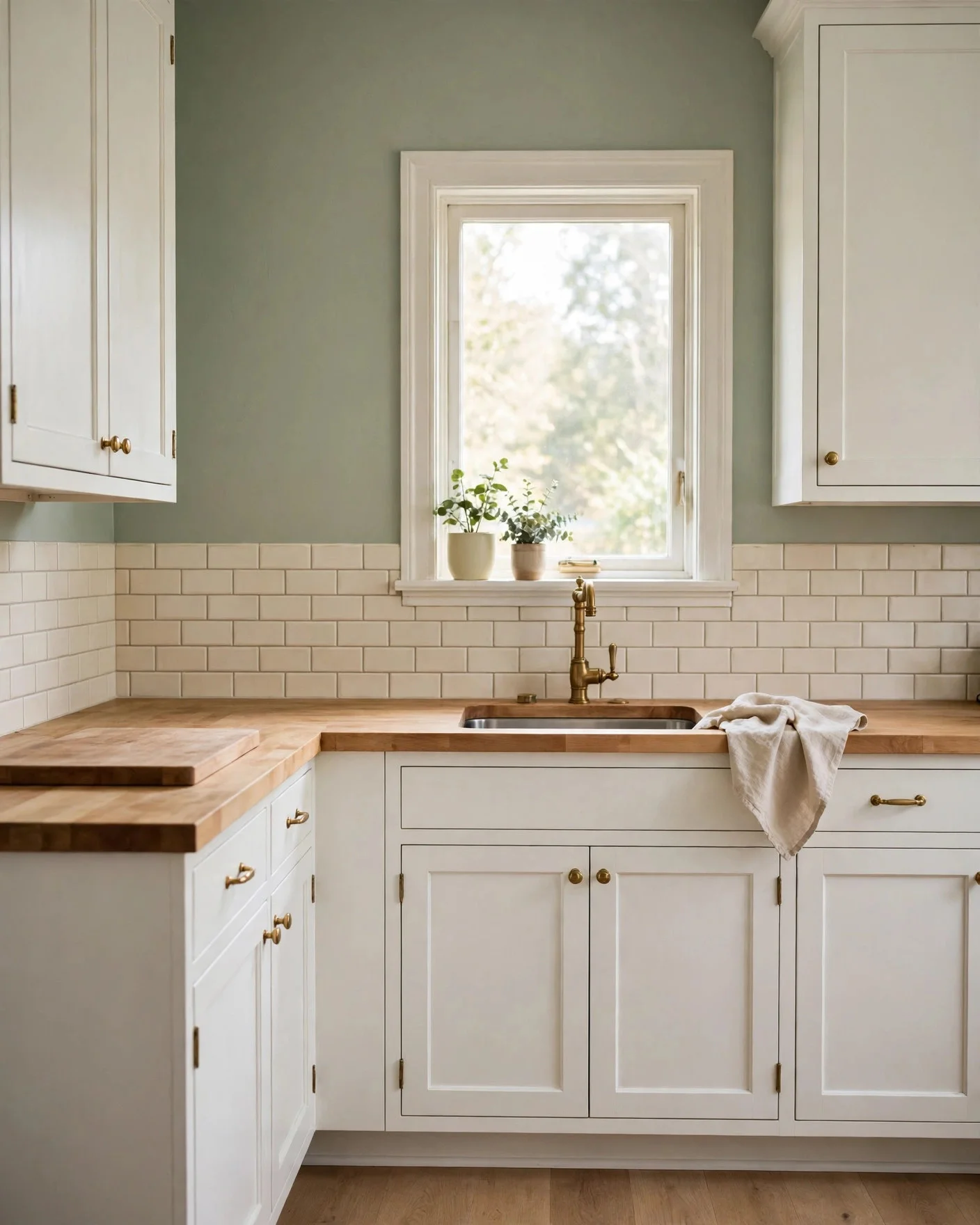
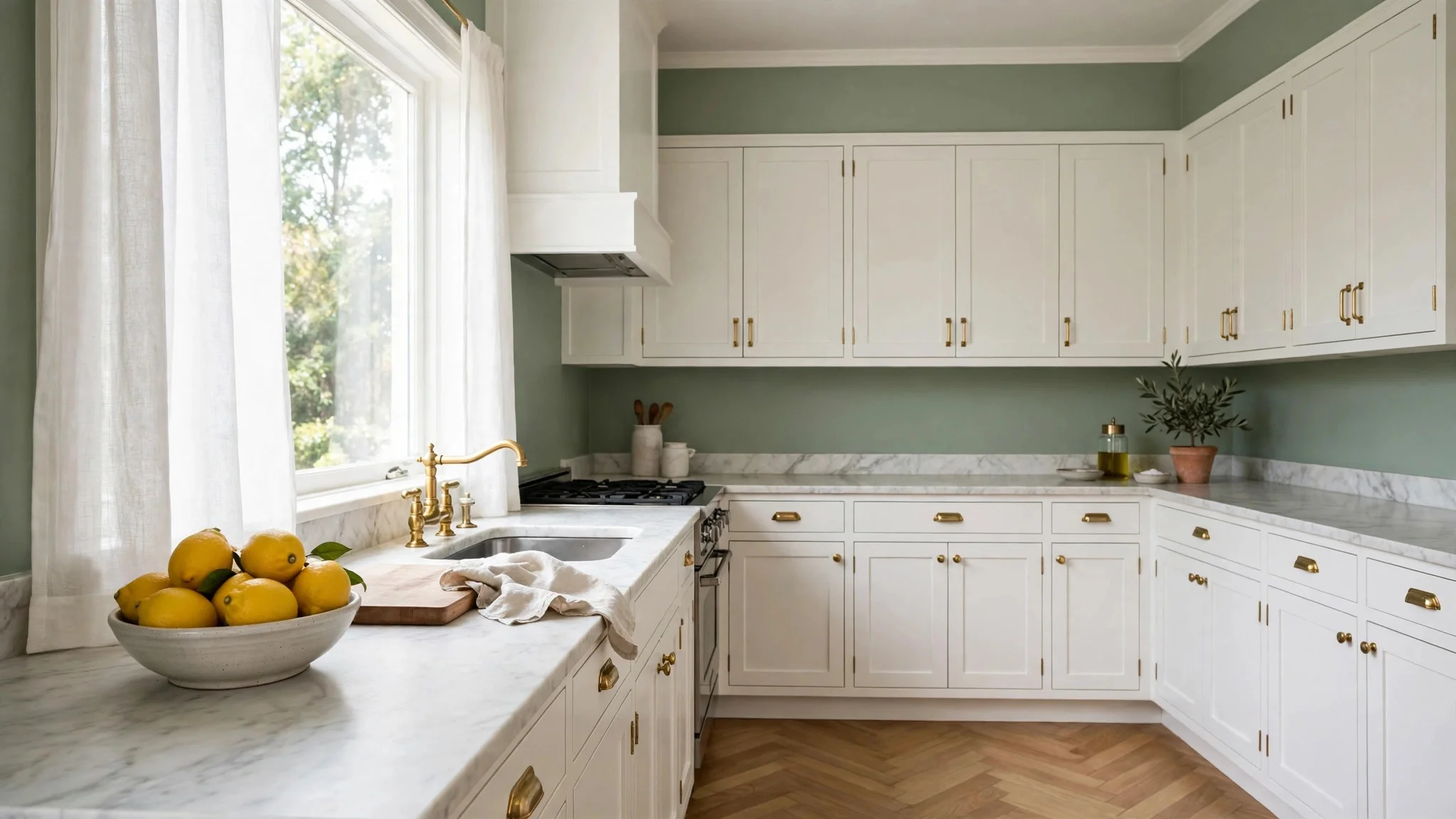
Sage green is the color that made plain kitchens feel designed again. The gray in it keeps it calm, the green keeps it alive, and it flatters the materials most kitchens already have: white and wood cabinets, marble and butcher block counters, and warm metal hardware.
Sage suits farmhouse, rustic, and modern rooms because it reads as a neutral with a point of view. In a bright room it looks fresh and pale, while in a low light room it grows richer, so pick a lighter sage if your kitchen faces north. Pair it with cream tiles or a white backsplash to keep the softness. Sage sits between green and gray, which is why it pairs with so many cabinet colors. These kitchen wall color ideas start with sage for a reason: it is hard to get wrong.
Cabinets: White, cream, light wood.
Counters: Marble, butcher block.
Hardware: Brass, brushed gold.
2. Navy Blue Walls for Bold Contrast
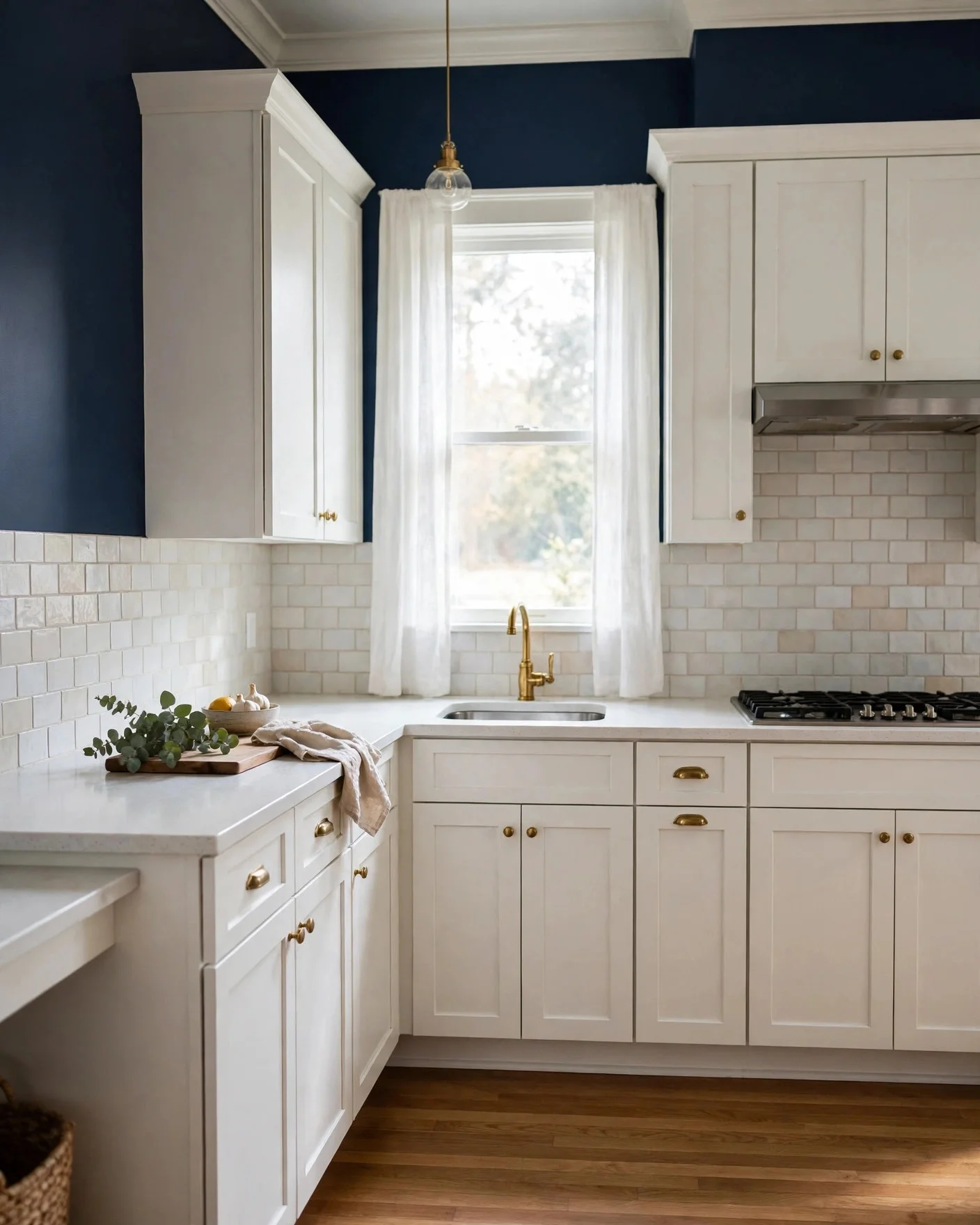
Navy blue walls give a kitchen instant depth, and they earn their keep by making white and light wood cabinets look crisp and costly beside them. Navy is a cool color, so it balances warm rooms and south facing light well, and it hides the small marks that busy kitchens collect.
Keep counters and backsplash light. White quartz and pale tile are the classic partners, so the room reads bold rather than dark. Brass and gold hardware glow against navy, while chrome can look cold. On wood floors, navy pulls out the warm tones and the whole room feels richer.
Small kitchen? Paint navy on one wall only, behind open shelves or the range, and keep the rest warm white. For more small kitchen styling, see our apartment ideas.
3. Warm White Walls That Never Feel Cold
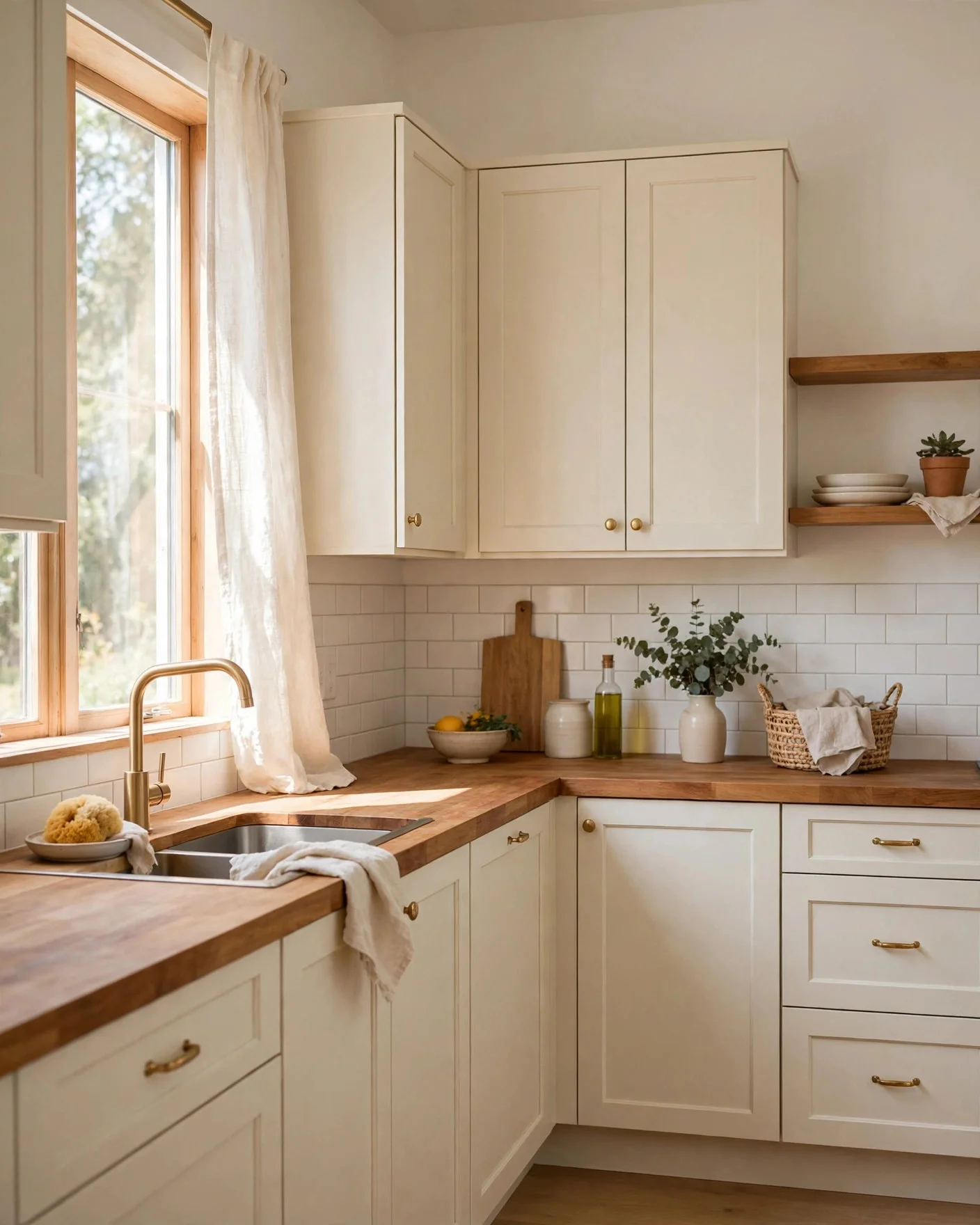
Warm white is the quiet classic: it brightens any kitchen, suits every cabinet color ever made, and never goes out of style. The trick is the warm part. Pure bright whites can look blue and chilly beside wood or cream cabinets, while a white with a drop of cream or beige in it glows in both daylight and evening light.
Warm white is the safest wall for renters and for kitchens with mixed finishes, and it leads these kitchen wall color ideas for anyone who wants a wall that never fights the room. It lets counters and backsplash be the pattern. Test two whites side by side. Against your cabinets, the right one will look clean and the wrong one will look dirty.
Do:
- Match the white’s warmth to your cabinets.
- Use it to calm busy counters.
Do not:
- Mix cool white walls with cream cabinets.
- Skip the swatch test, since whites shift most.
4. Terracotta Walls for Warmth and Appetite
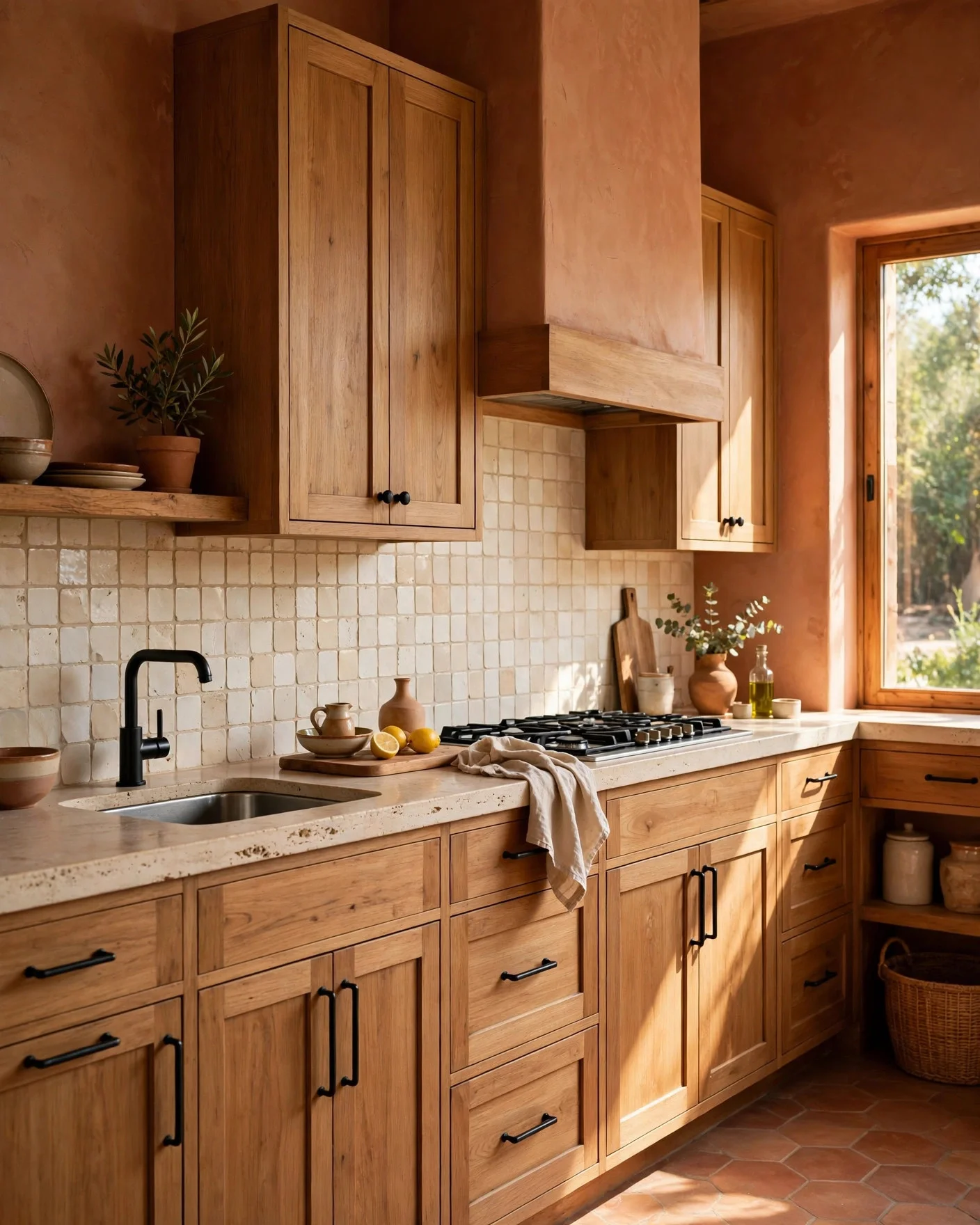
Terracotta brings the colors of clay, brick, and late afternoon sun into the kitchen, and few shades feel as welcoming around food and people. It pairs naturally with wood cabinets of almost any tone, cream and travertine counters, and handmade style tiles in the backsplash.
Terracotta suits rustic, Mediterranean, and farmhouse kitchens most, and it warms north facing rooms that never get direct sun. Keep floors lighter than the walls or choose a pale terracotta, since the color is strong. Black hardware and dark metal lights give it a modern edge, while brass keeps it soft.
Tone tip: Terracotta darkens as it dries and grows richer in low light. Buy one shade lighter than your first pick.
5. Olive Green Walls With a Grounded Feel
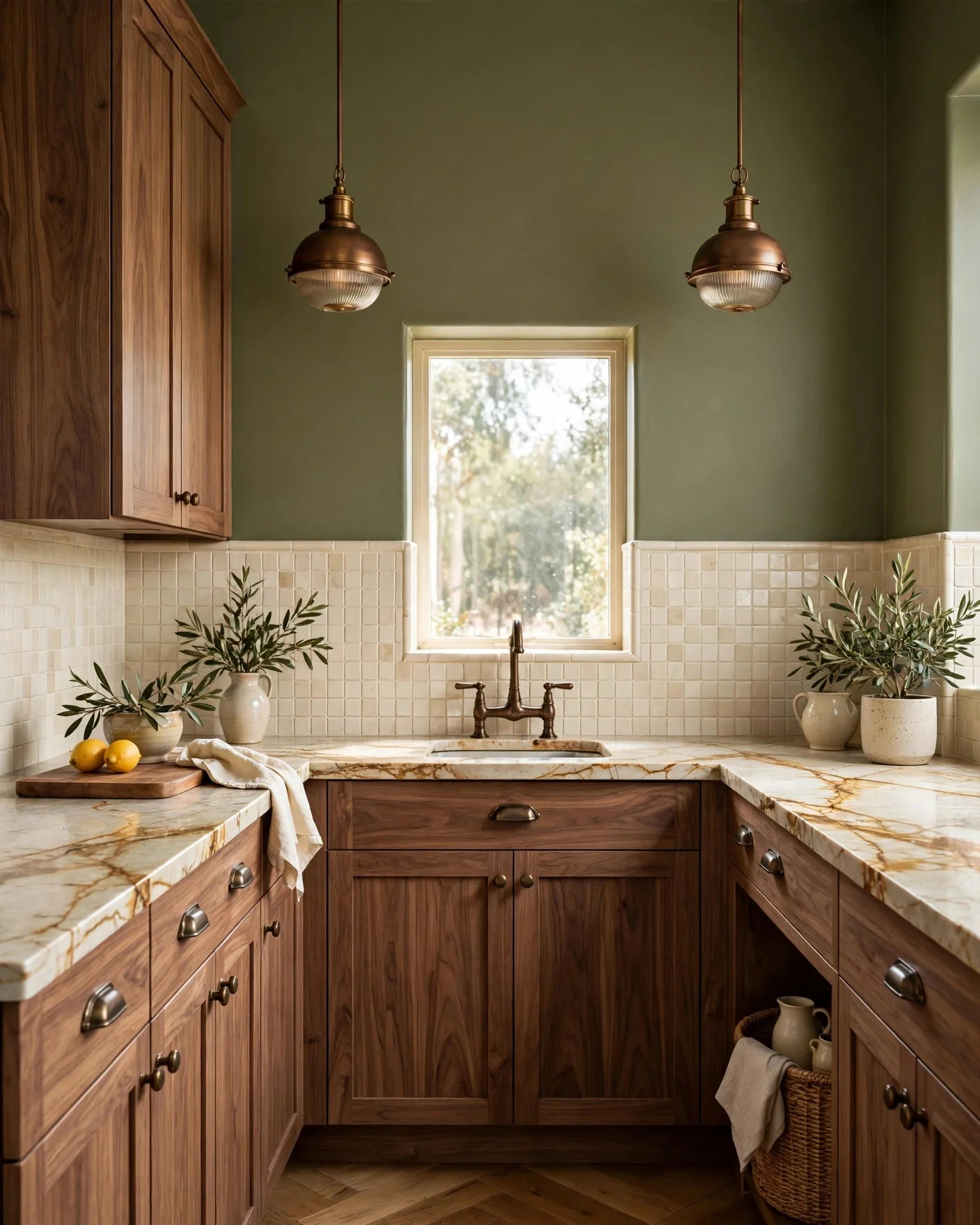
Olive green is sage’s richer, warmer cousin, a yellow based green that feels grounded and a little old world. It loves medium and dark wood cabinets, stone counters with warm veining, and backsplashes in cream, zellige style tile, or aged brick.
Olive suits traditional, rustic, and contemporary kitchens that want color without brightness. Because it is a mid to dark tone, it works best in kitchens with decent daylight or good layered lighting. Brass, bronze, and black hardware all sit well on olive. Keep chrome away, since its cool shine fights the warmth. These kitchen wall color ideas suit open plan rooms too, where the kitchen shares light with our living room ideas.
Cabinets: Walnut, oak, cream.
Backsplash: Cream tile, aged brick.
Floors: Warm wood, terracotta tile.
6. Charcoal Gray Walls for a Modern Edge
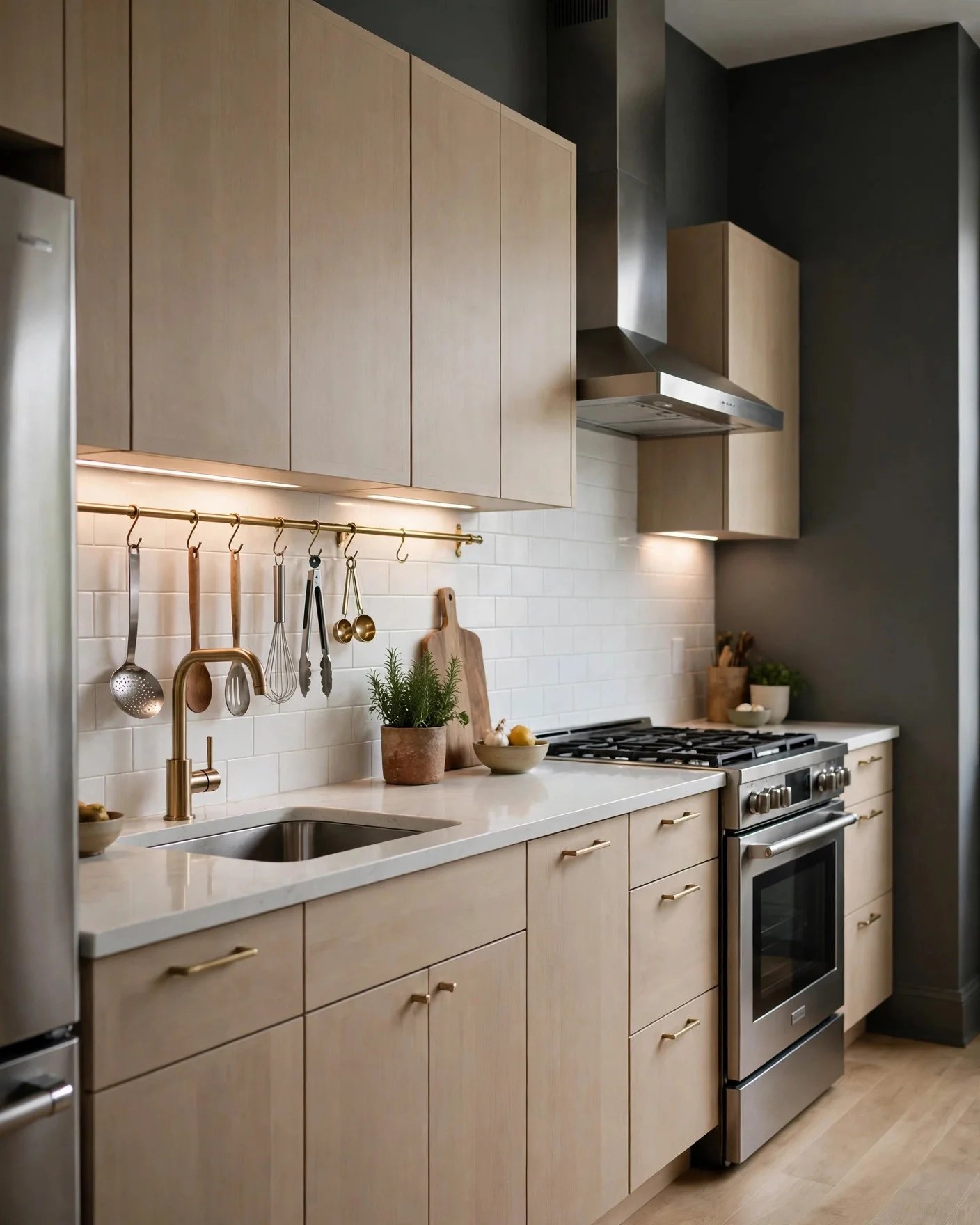
Charcoal gray walls give a kitchen a tailored, modern edge without the full commitment of black. The depth makes light cabinets, white counters, and stainless appliances look sharp, and it turns open shelves and brass rails into highlights.
Charcoal suits contemporary and modern farmhouse kitchens, and it is kind to busy rooms because it quiets patterned floors and busy backsplashes by contrast. It does drink light, so plan on good under cabinet lighting and keep the ceiling white. On the wall behind glass front cabinets or shelves, charcoal makes dishes and glassware read like a display.
Balance rule: For every dark wall, give the room one light surface at eye level: counters, shelves, or a pale backsplash.
7. Dusty Blue Walls for a Soft Coastal Feel
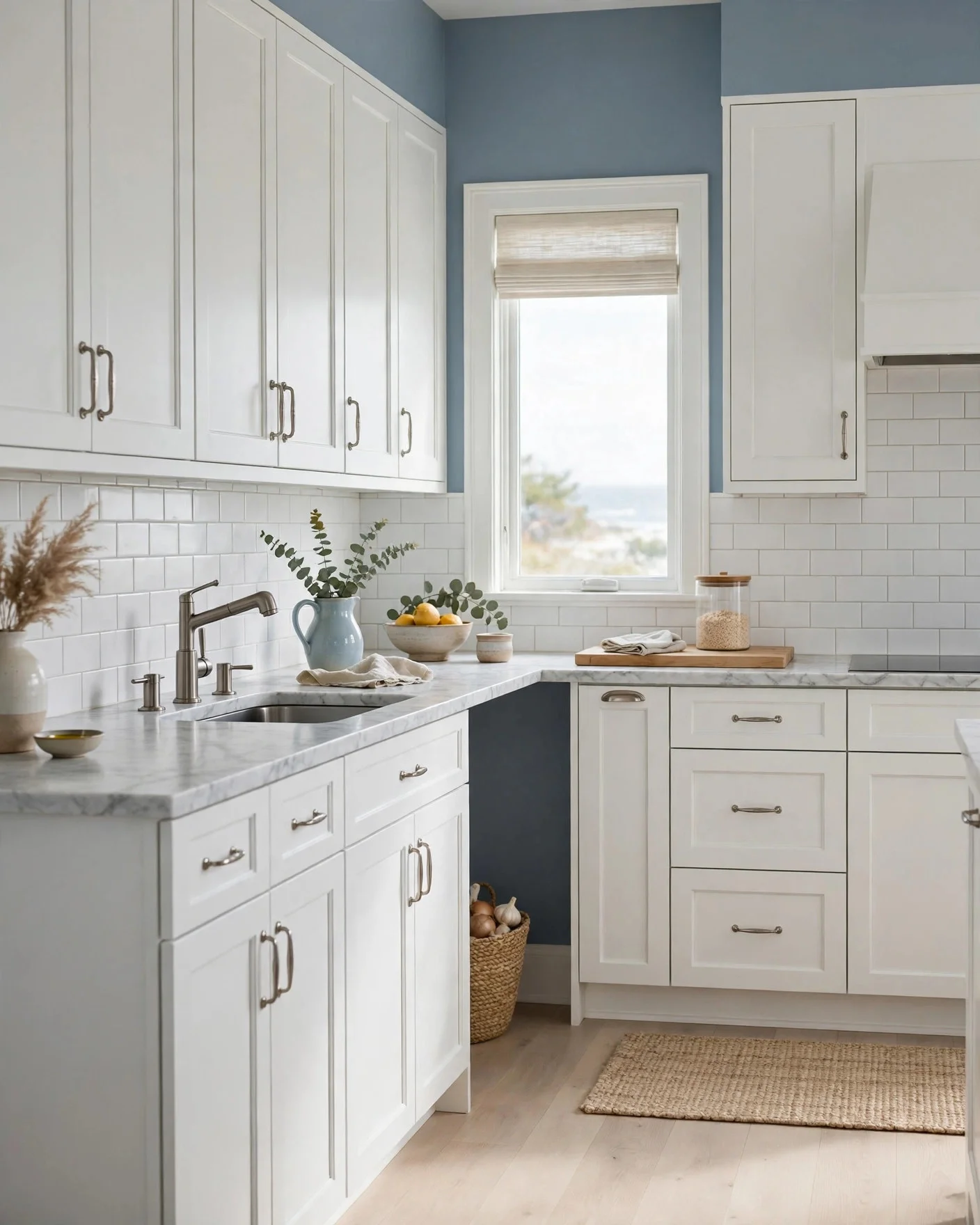
Dusty blue is a gray softened blue that feels calm, clean, and a little coastal without any beach theme. It pairs well with white and pale gray cabinets, marble and light quartz counters, and simple subway tile, and it cools down kitchens that get strong warm sun.
Dusty blue suits traditional, farmhouse, and transitional rooms, and it is gentle enough for small kitchens that cannot carry a dark shade. Silver, chrome, and brushed nickel hardware match its cool tone. White ceramics and blue patterned tiles layer in easily. On wood floors, choose mid tones, since very dark floors can make dusty blue look washed out.
Cabinets: White, pale gray.
Counters: Marble, light quartz.
Accents: White ceramics, woven textures.
8. Butter Yellow Walls for a Cheerful Morning Kitchen
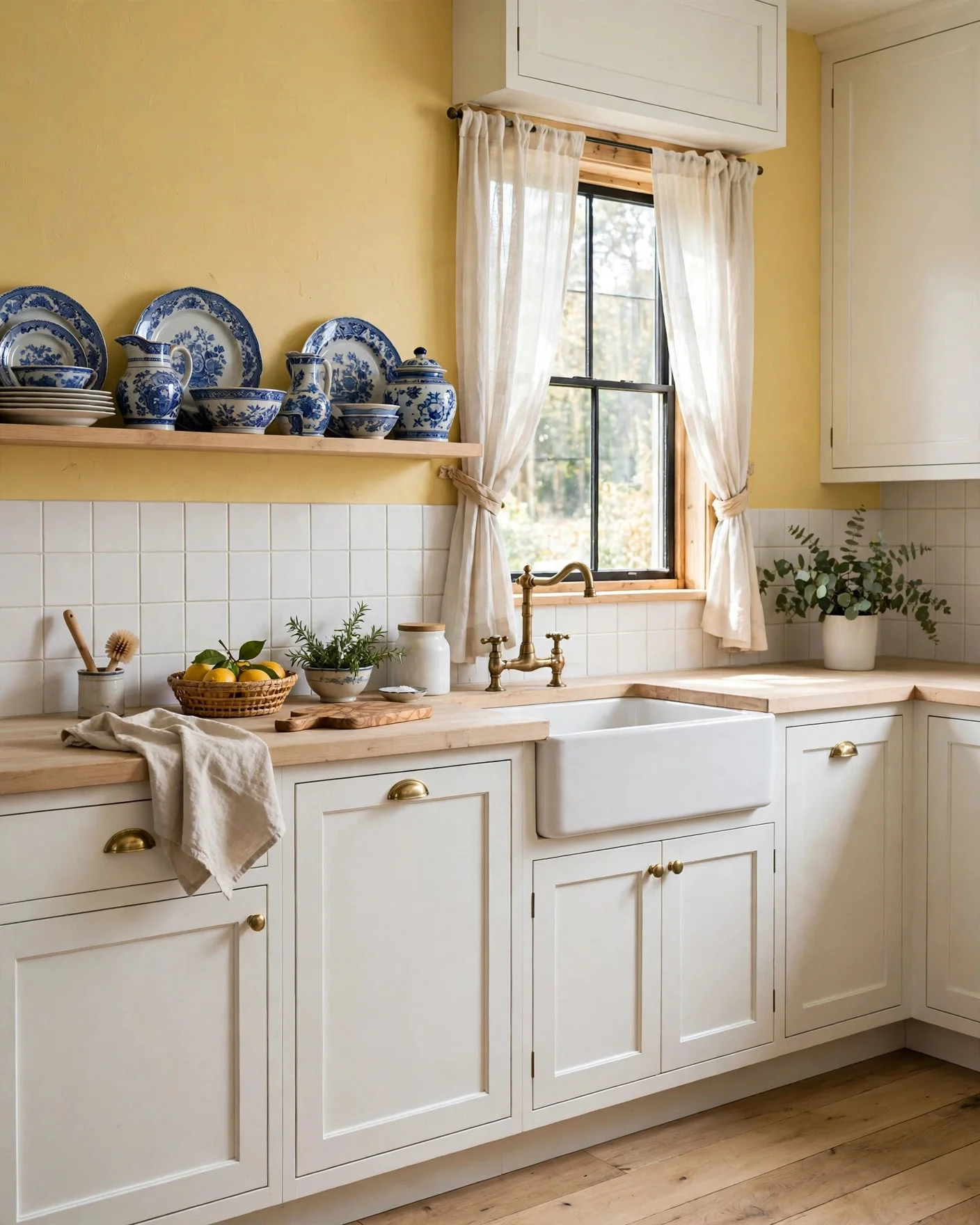
Butter yellow is sunlight you can paint. A soft, creamy yellow lifts dark corners, flatters white and cream cabinets, and makes breakfast feel like an event in rooms that face away from the sun. Keep the yellow buttery rather than bright. Strong yellows shout in daylight and tire the eye.
Butter yellow suits farmhouse, cottage, and traditional kitchens, and it pairs with white counters, pale wood, and simple tile so the wall stays the cheerful note. Blue and white ceramics are its classic partner, a small nod to country kitchens that never dates.
Light check: Yellow grows stronger in warm evening light. Check your swatch at dinner time, not just at noon.
9. Soft Beige Walls That Work With Everything
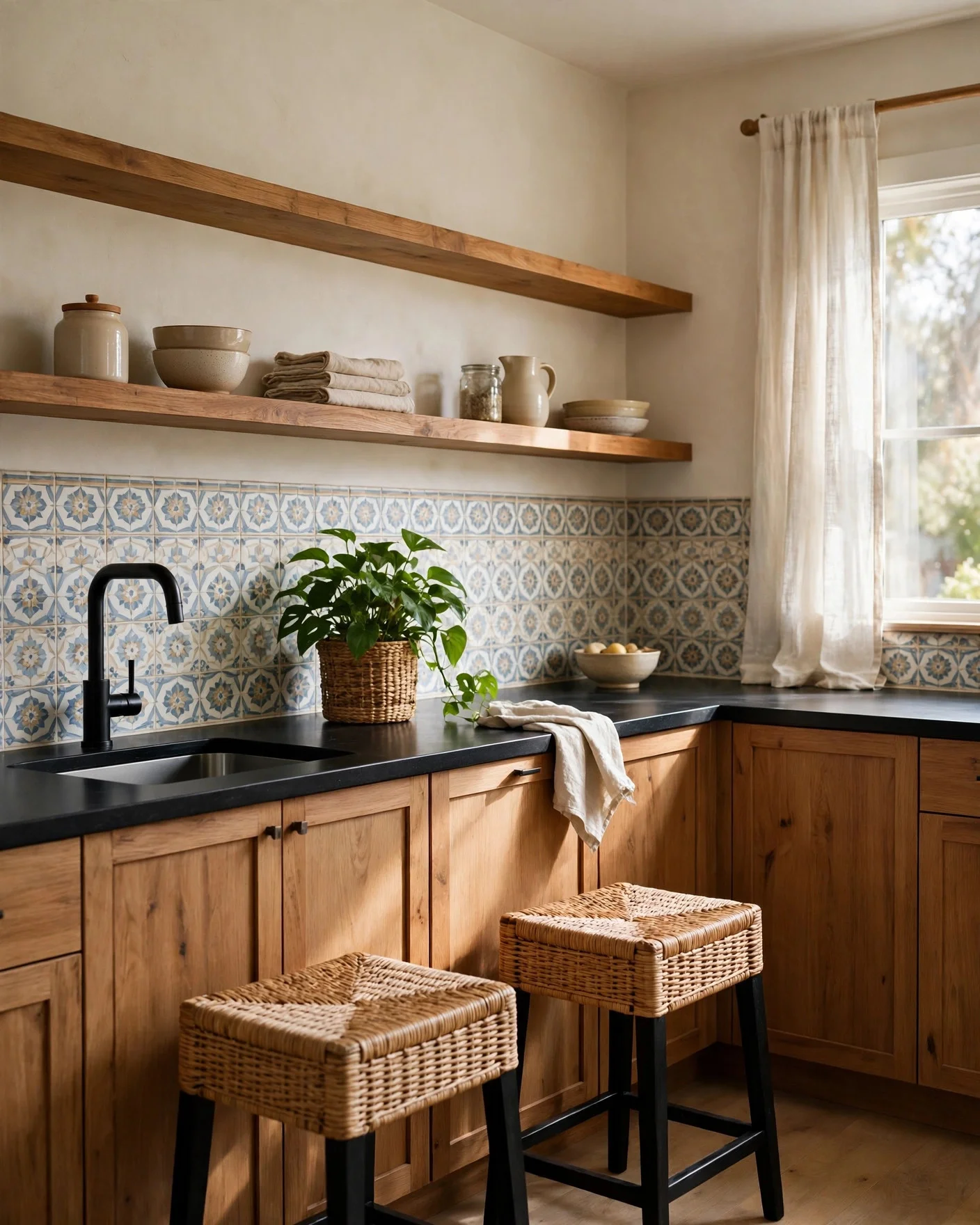
Soft beige is the diplomat of kitchen colors: it gets along with wood cabinets, white cabinets, black counters, stone counters, and almost any floor. A beige with a warm, slightly golden base keeps the room from feeling gray and flat, which is the one risk with neutrals.
Beige suits every style on this list because it steps back and lets texture lead: woven stools, wood shelves, patterned tile. In low light rooms choose a lighter beige so the walls do not go muddy, and add contrast through hardware and textiles rather than a second paint color. Of all the kitchen wall color ideas here, beige is the safest first step.
Make beige interesting:
- Add wood shelves or a wood rail.
- Use black or brass hardware for contrast.
- Layer a patterned backsplash or runner.
- Bring one green plant into view.
10. Muted Pink Walls for a Soft, Warm Glow
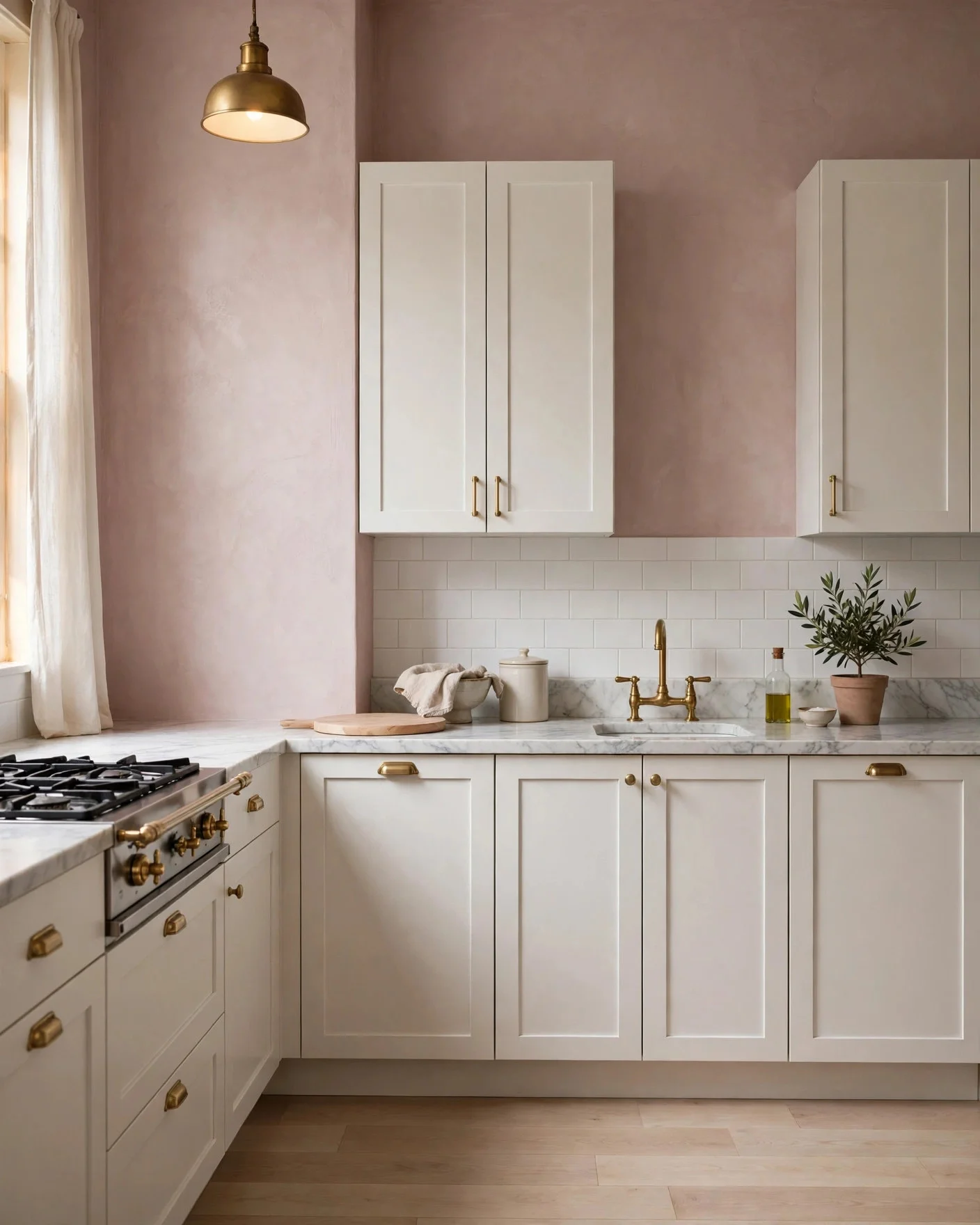
Muted pink, the dusty blush end of the family, gives a kitchen a warm glow that flatters faces around the table and makes white cabinets look gentle instead of stark. The gray in the pink keeps it grown up. This is a plaster tone, not a candy one.
Muted pink pairs with marble counters, brass hardware, and pale wood, and it suits contemporary, cottage, and eclectic kitchens. It is a kind choice for north facing rooms, since it adds the warmth the light lacks. Keep the backsplash plain white or cream so the pink stays the single soft note.
Grow it up: The dustier the pink, the more it reads as a neutral. If the swatch looks like candy, go one shade grayer.
11. Rich Forest Green Walls for Drama
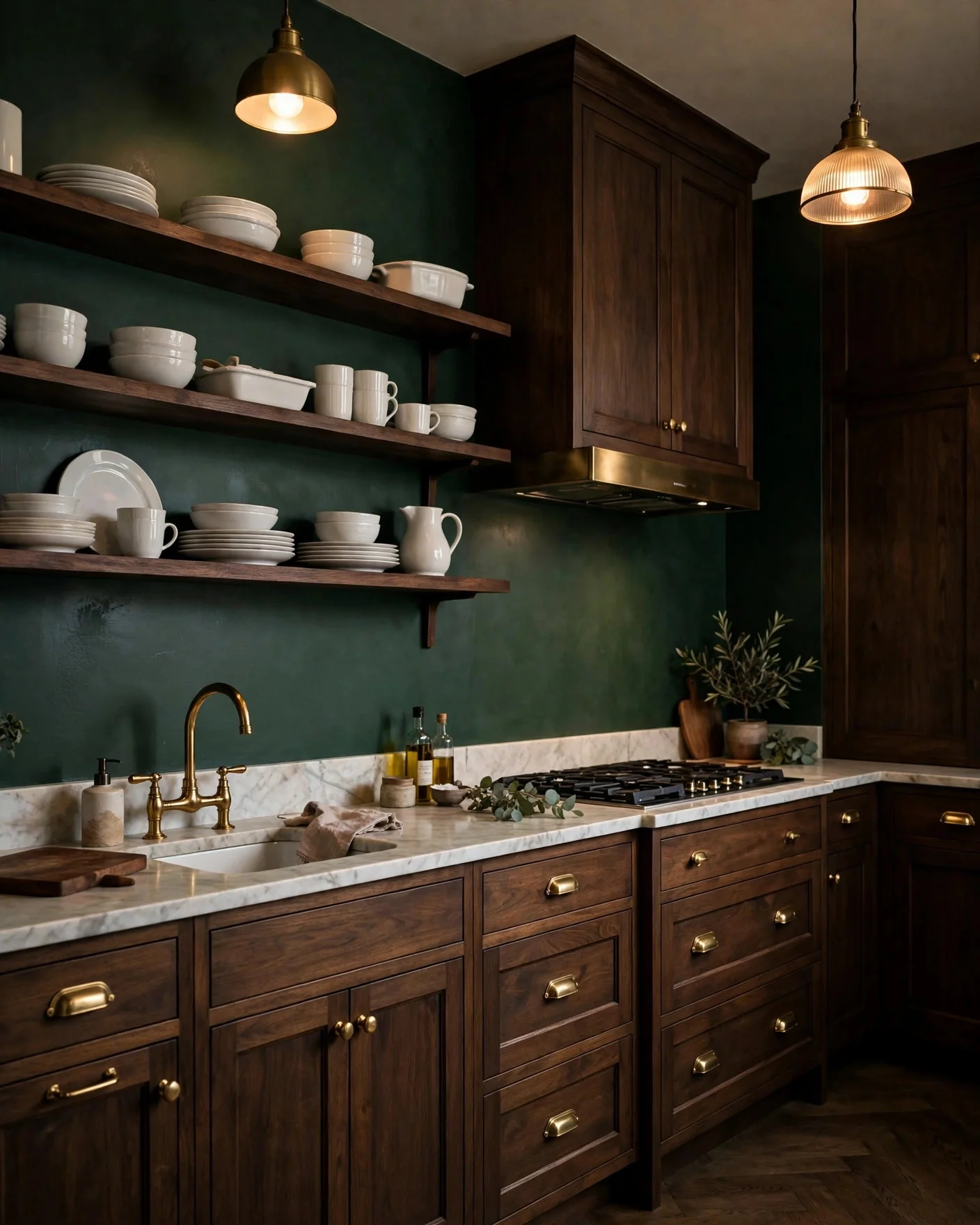
Forest green is the rich, saturated green of tailored rooms and old libraries, and in a kitchen it feels rich rather than loud. It is the classic partner for brass hardware, marble counters, and dark wood, and it makes white dishes on open shelves look like a shop display.
Forest green suits traditional, contemporary, and moody modern kitchens with good light. In a dim room, limit it to one or two walls and warm the lighting. Keep the backsplash simple, white or marble, since the wall is already the event. Floors in mid to dark wood complete the grounded feel. For more wall styling, see our boho wall decor ideas.
Hardware: Unlacquered brass, bronze.
Counters: Marble, dark stone.
Shelves: Dark wood with white dishes.
12. Classic Black Walls for a Dramatic Kitchen
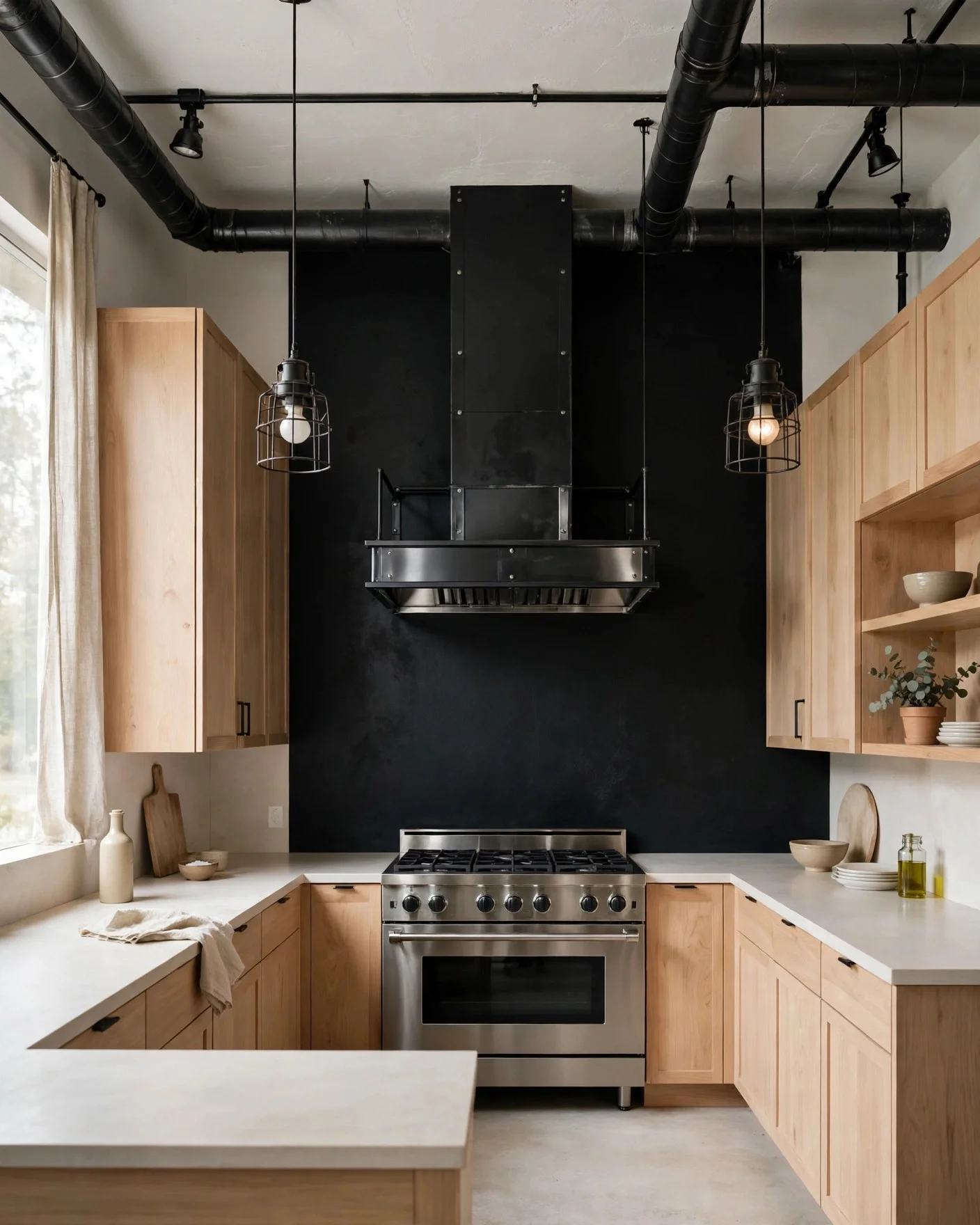
Black walls are a bigger step than most people need, but in the right kitchen they are unforgettable. Black makes light wood and white cabinets glow by contrast, swallows visual clutter, and turns a plain room into a designed one. It works best with strong daylight or layered lighting, pale counters, and a light ceiling, and it suits contemporary and industrial kitchens most.
One black wall behind the range or shelves is the safer version of the same idea. Use a washable matte or eggshell finish, since black shows every splash and fingerprint more than mid tones do. Paint made for kitchens handles steam and wiping far better than plain wall paint.
Finish note: Matte black hides less than you hope. Eggshell or satin wipes clean and still looks soft. For warm light over dark walls, see our wall sconce ideas.
13. Rich Burgundy Walls for a Cozy, Formal Feel
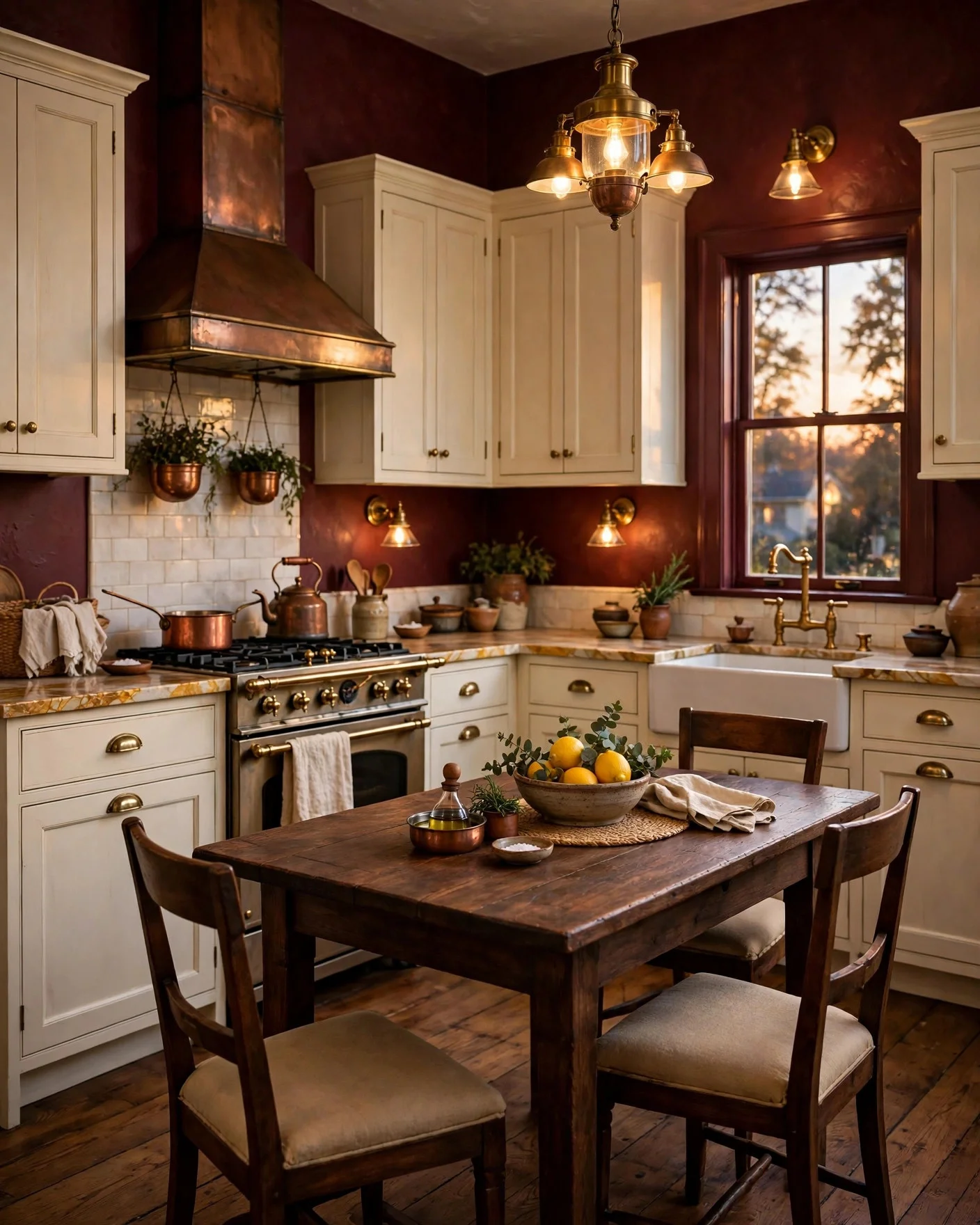
Burgundy walls bring the mood of a dining room into the kitchen: rich, warm, and a little formal. The shade flatters cream and warm white cabinets, dark wood, and stone counters with brown or gold veining, and it makes brass and copper glow.
Burgundy suits traditional and rustic kitchens, eat in kitchens most of all, since the color is at its best around a table in evening light. It is strong, so balance it with a pale backsplash and keep window walls lighter if the room is small. Patterned floors in cream and rust tones sit comfortably with it. These kitchen wall color ideas lean formal here, so keep the rest of the room simple.
Do:
- Pair with cream cabinets and brass.
- Keep the backsplash pale.
Do not:
- Add a second dark color beside it.
- Use it in a windowless room.
14. Teal Walls for Bold Blue Green Energy
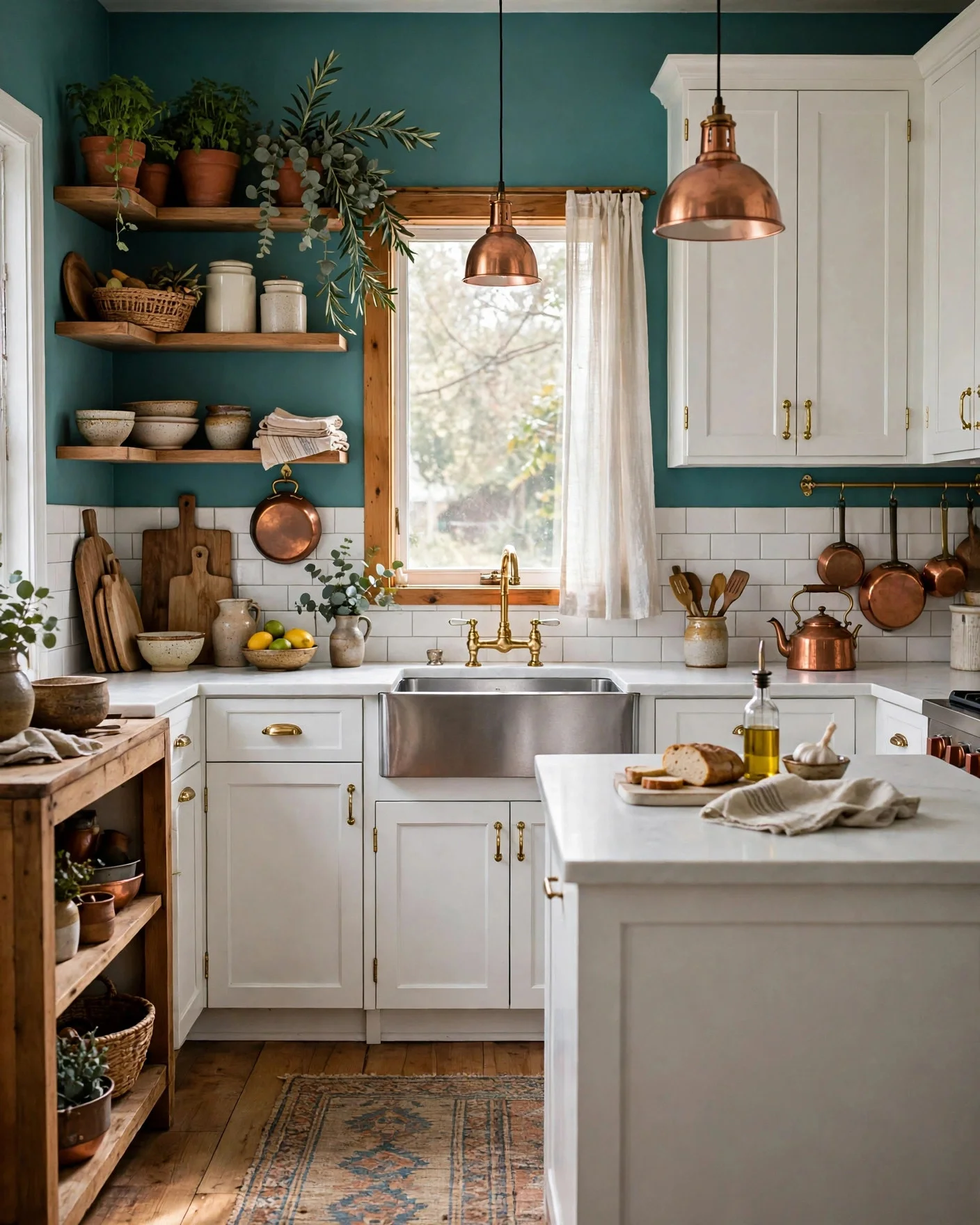
Teal sits between blue and green and brings both: the calm of blue with the life of green, at full strength. It is a joyful wall for white and light wood cabinets, white counters, and simple tile, and it suits contemporary, eclectic, and mid century style kitchens.
Teal is strong enough that one or two walls often beat four. The eating end of the kitchen is a good place for it. Warm metals, brass and copper, are its best partners, and warm wood floors keep it from feeling cold. In small doses, on the wall behind shelves, teal makes white dishes pop.
Try it small: Paint the shelf wall or the inside of a glass cabinet run in teal first. Live with it a month, then decide on more.
15. Mustard Gold Walls for Warm Character
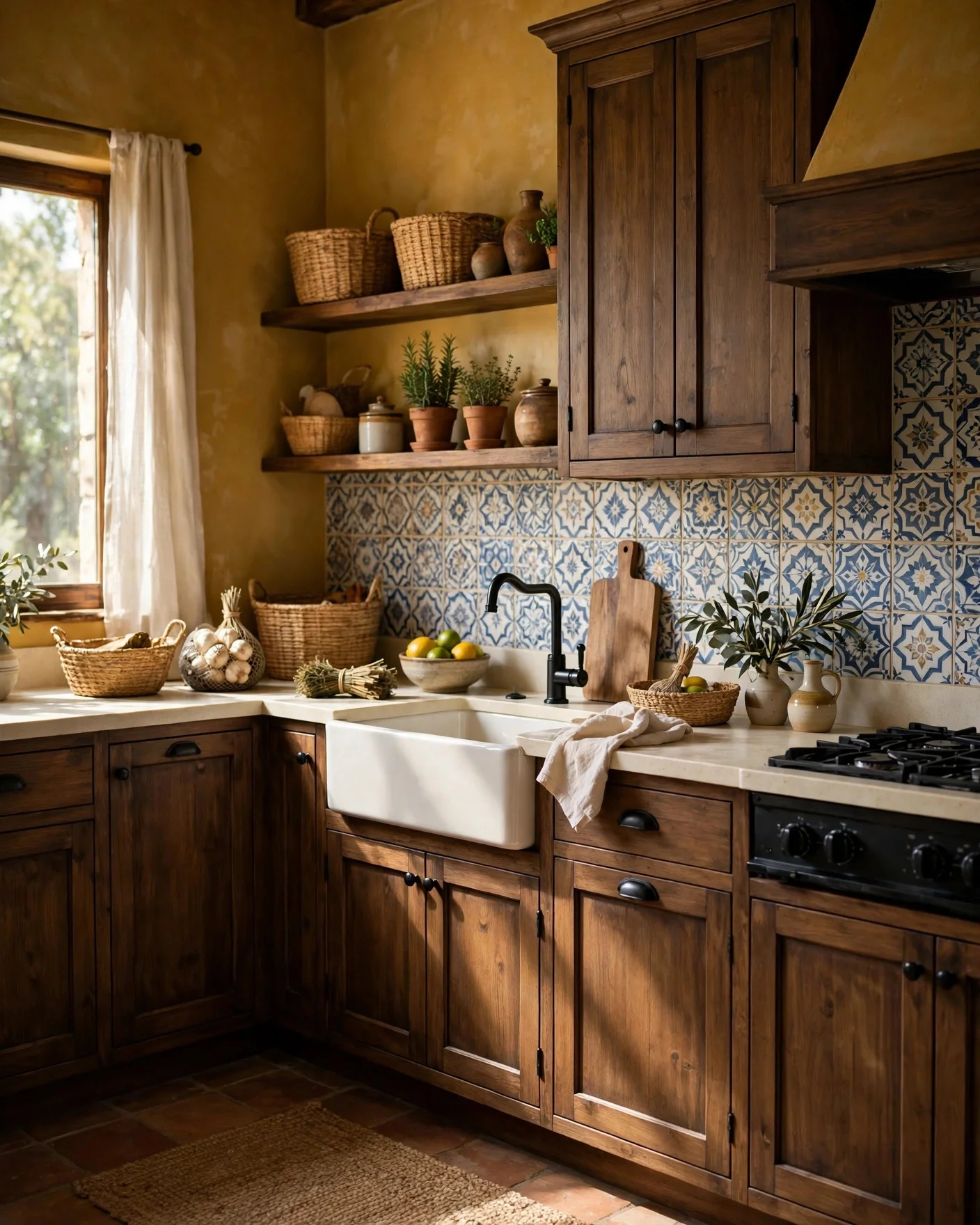
Mustard gold is the warm, earthy version of yellow: richer than butter, calmer than bright gold, and full of character. It suits rustic, farmhouse, and eclectic kitchens, pairs with dark and medium wood cabinets, cream counters, and patterned tile, and it glows in afternoon light.
Mustard can overpower a small room at full strength, so consider it for the walls around the eating area or as the single color behind open shelves. Black hardware sharpens it. Woven textures and plants keep it friendly. With white cabinets, mustard reads cheerful, and with wood, it reads rich. Mustard is one of the boldest kitchen wall color ideas here, so test it on one wall first.
Cabinets: Dark wood, white.
Backsplash: Cream or patterned tile.
Accents: Black metal, woven baskets.
16. Soft Lavender Walls for a Gentle Cool Note
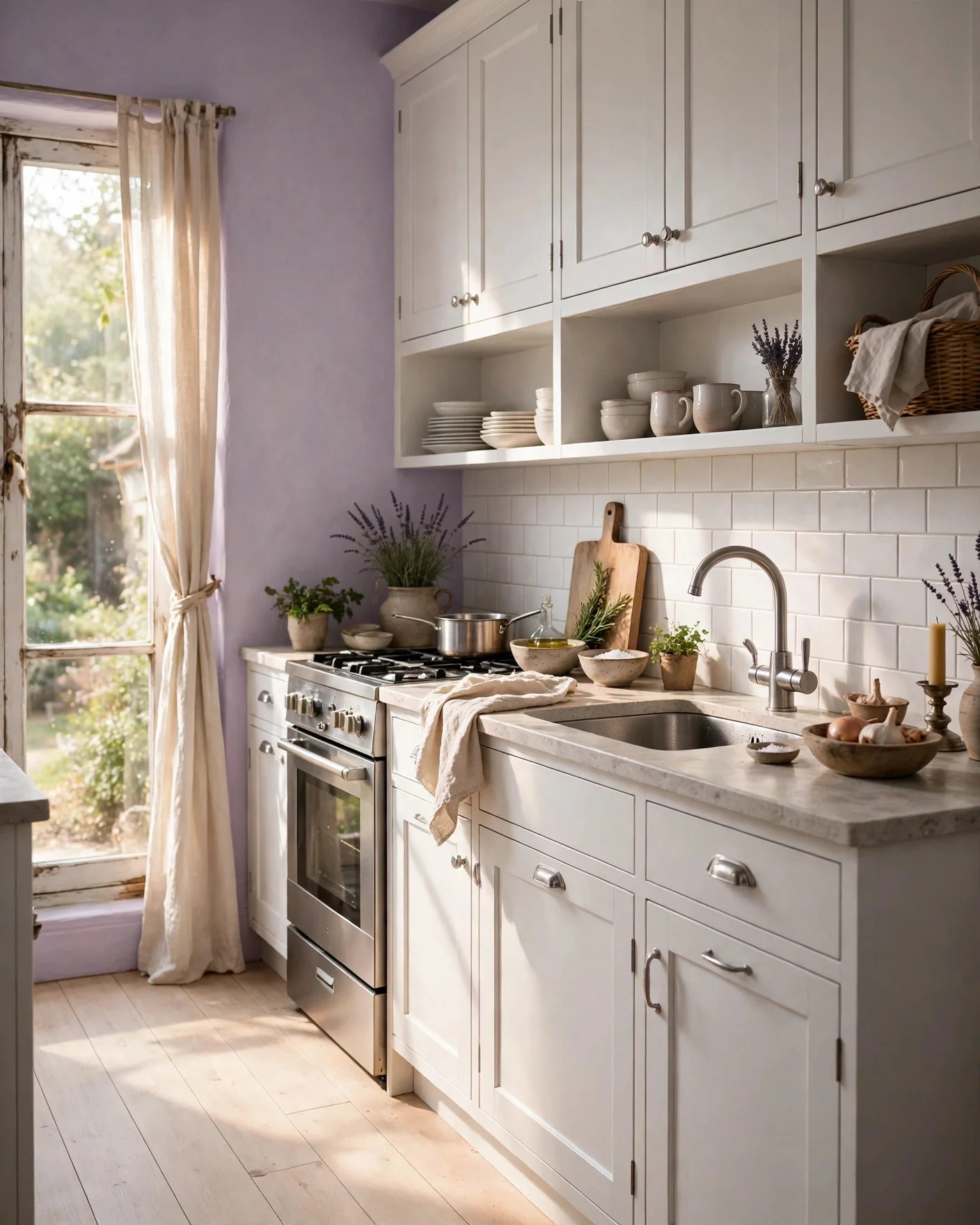
Soft lavender is the quiet surprise on this list: a pale, gray leaning purple that cools a warm kitchen and feels fresh beside white cabinets and light stone counters. It suits cottage, contemporary, and light traditional kitchens, and it is at its best in rooms with warm sun, where its cool tone balances the light.
Keep partners simple: white tile, pale wood, and silver or glass accents, since lavender does not need competition. A grayer lavender reads as a neutral and is the safer pick. A pinker one reads sweeter and suits a country style room.
Shade check: Lavender shifts with light more than most colors. A swatch that looks gray at noon can look lilac at dusk.
17. Peach Walls for a Warm, Friendly Glow
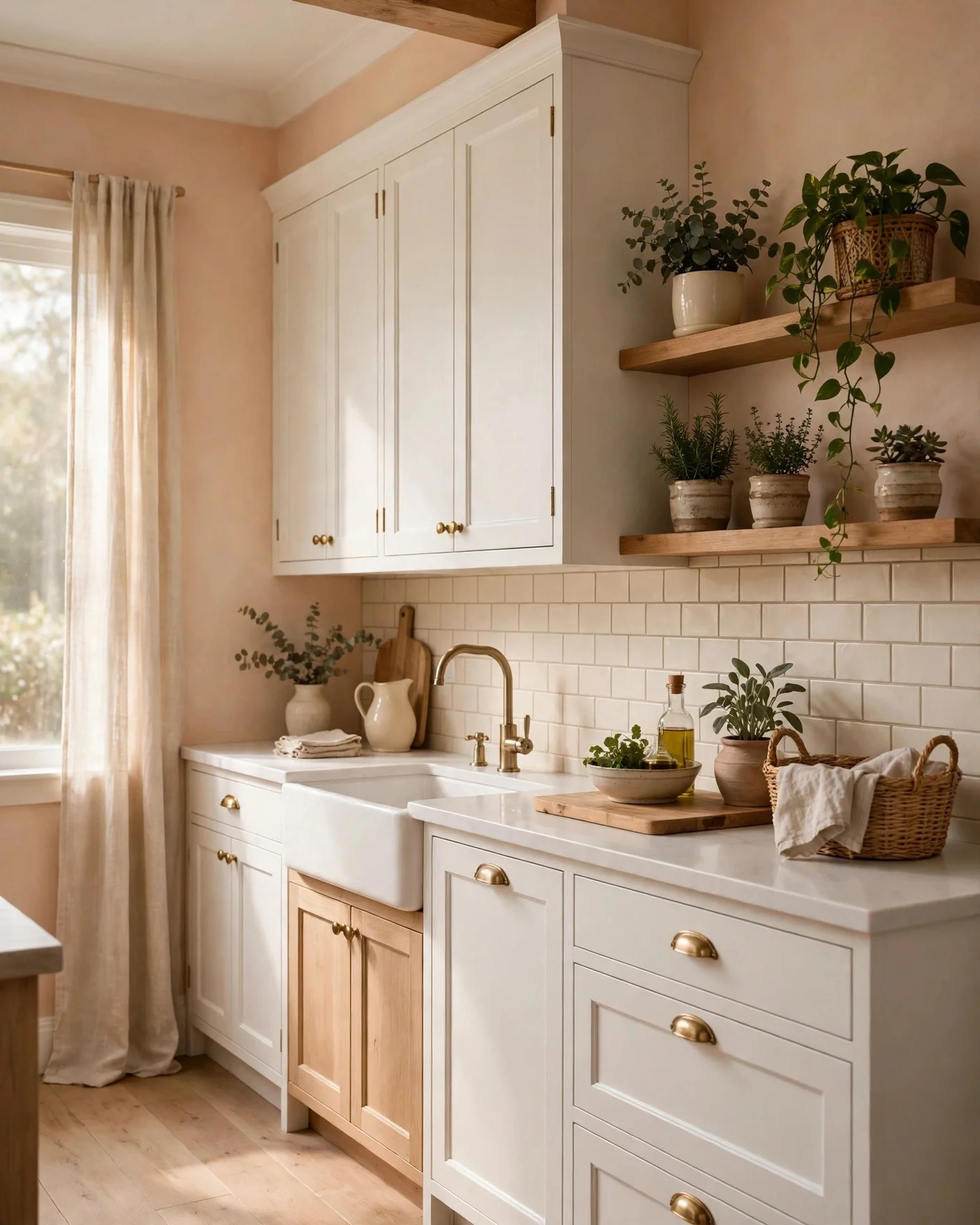
Peach walls give a kitchen the glow of ripe fruit and candlelight combined: warm, friendly, and softer than orange or terracotta. Peach flatters white and cream cabinets, light wood, and white counters, and it suits farmhouse, cottage, and retro leaning kitchens.
It is a kind color for rooms that get little sun, since it lends the warmth the light withholds. Keep the backsplash white or cream and let green plants be the contrast. Peach and green are natural partners. If peach feels sweet, choose a shade with more beige in it for a clay tinted version. These kitchen wall color ideas stay soft here, which is why peach suits small rooms so well.
Peach: Lighter, softer, suits small rooms.
Terracotta: Richer, earthier, suits big rooms. Both warm north facing kitchens well.
18. Slate Blue Gray Walls for Quiet Depth
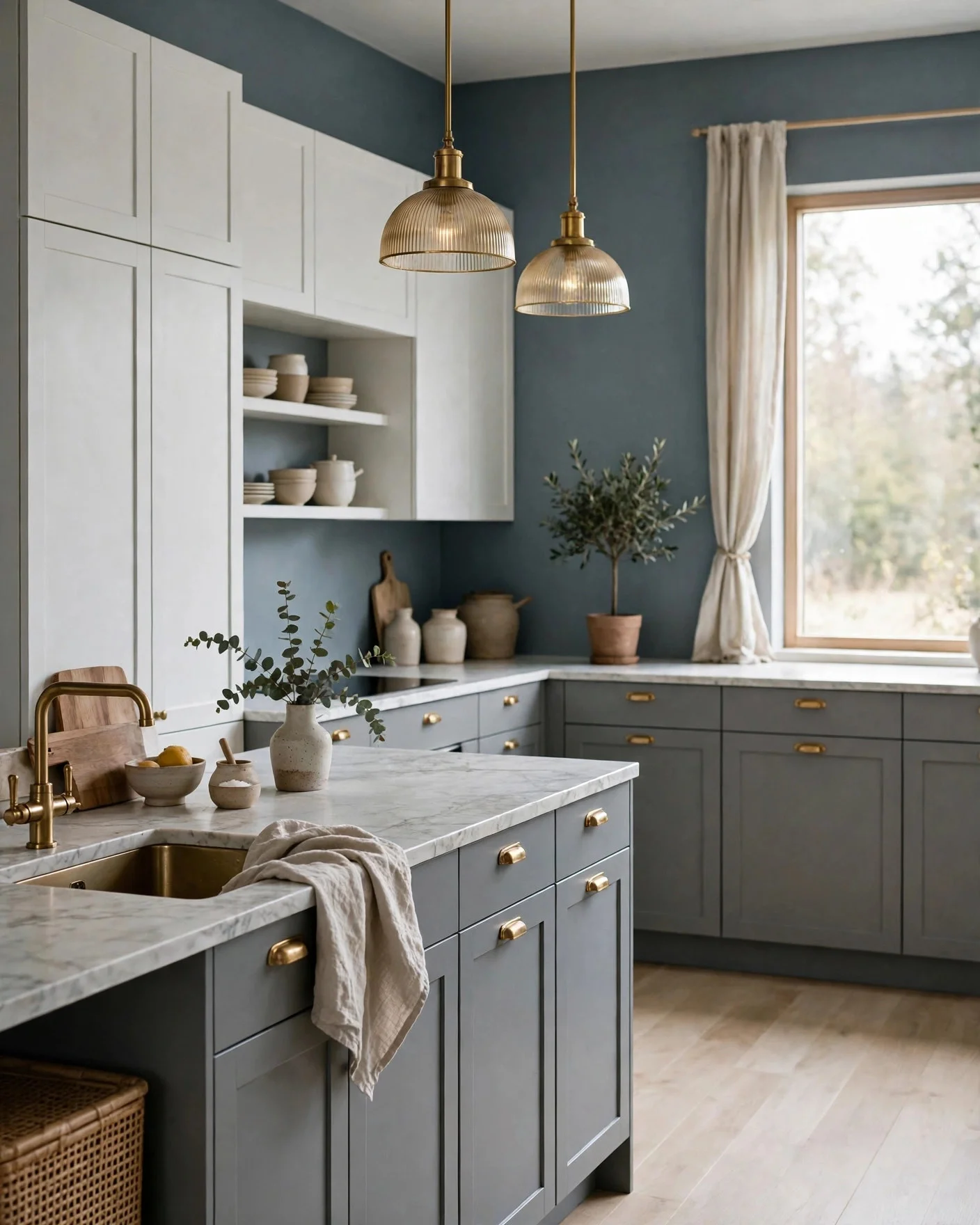
Slate blue gray is the mid tone for people who want color that behaves like a neutral. Richer than dusty blue and grayer than navy, it gives white and gray cabinets a calm backdrop, suits marble and concrete look counters, and works in modern, transitional, and Scandinavian style kitchens.
Slate is steady in changing light, which makes it a safe pick for rooms used from dawn to midnight. Brass warms it, black sharpens it, and pale wood floors keep it from going cold. It is also a forgiving wall for open shelves, since dishes of every color sit well on it.
Neutral test: If your plates, towels, and art all look good against the swatch, the color will behave like a neutral.
19. Mint Green Walls for a Fresh Retro Feel
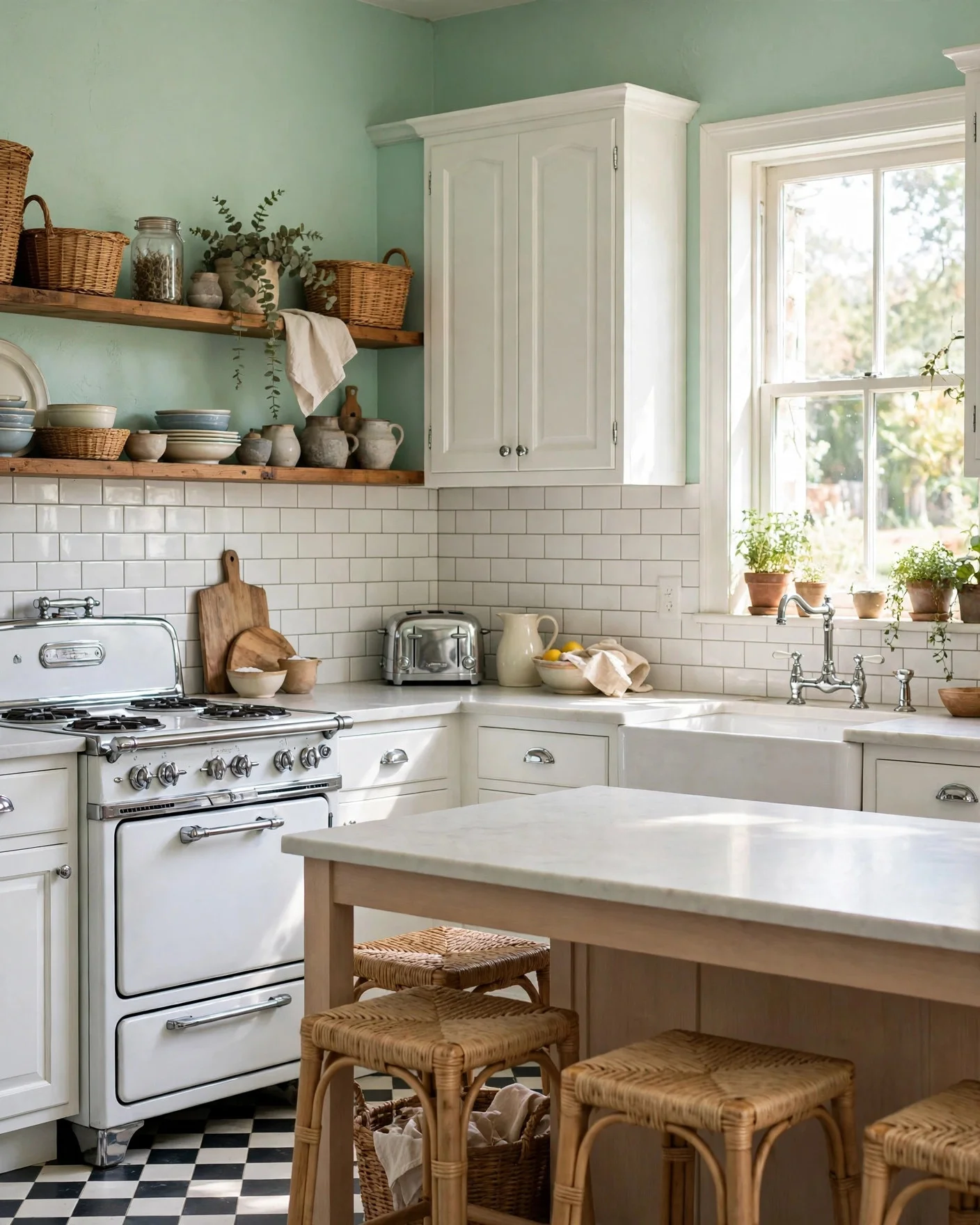
Mint green is the pale, bright green of old diners and farmhouse sinks, and it still feels fresh today. It lightens small kitchens, suits white and cream cabinets, and pairs with white tile, pale counters, and chrome or stainless finishes for a clean retro note.
Mint is a cool color, so it is happiest in sunny rooms. In a gray light room it can turn chilly, and a slightly warmer mint fixes that. Wood shelves and woven accents keep it from feeling like a cafe. This is a cheerful, low risk color that photographs well and ages kindly. For more small kitchen styling, see our tiny studio apartment storage hacks.
Cabinets: White, cream.
Backsplash: White subway tile.
Accents: Chrome, wood shelves, woven stools.
20. Two Tone Walls for the Best of Both
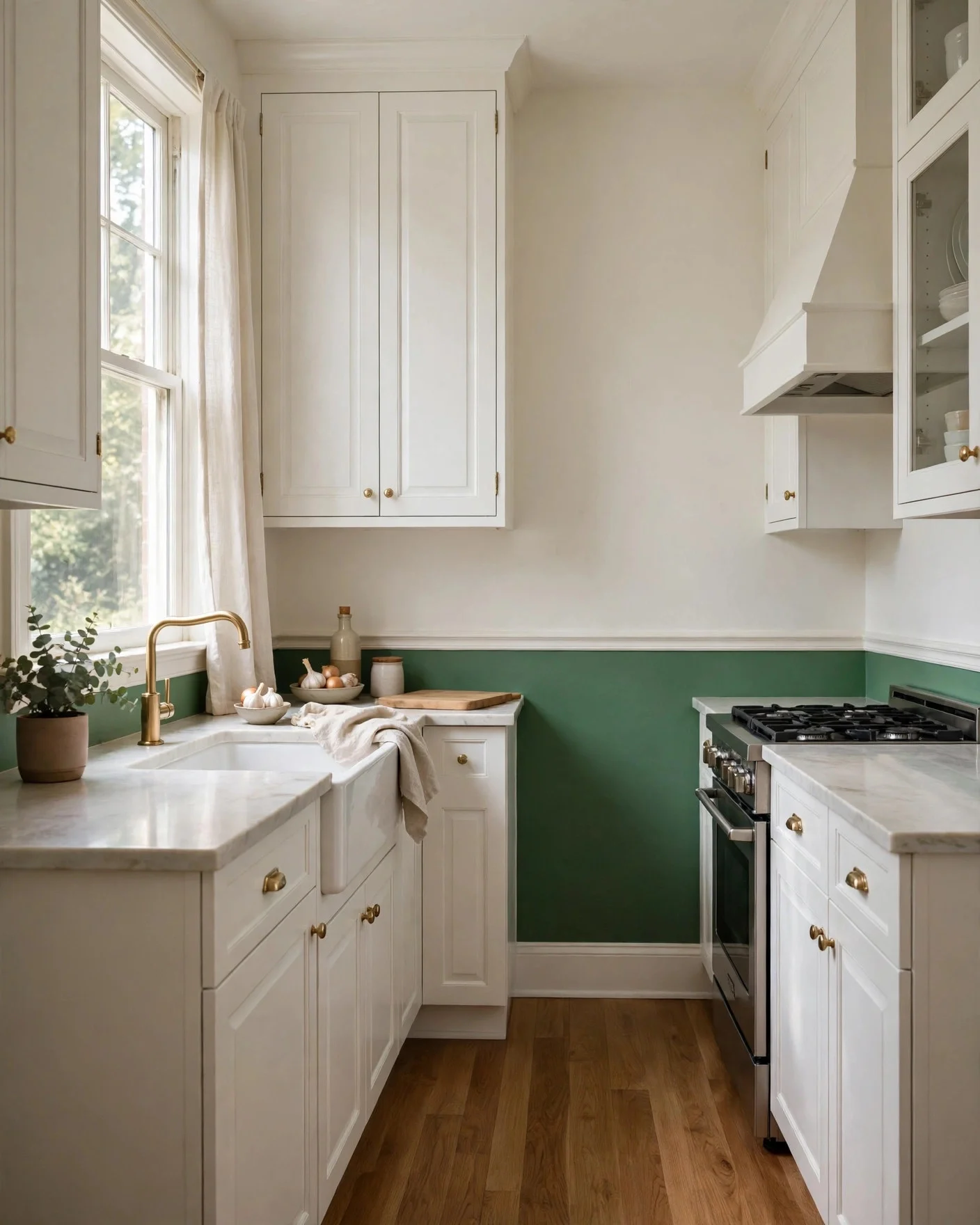
Two tone walls solve the light versus drama argument: a color on the lower half or on the cabinet run walls, warm white above and on the window walls. The color grounds the room where the work happens, and the white keeps the light bouncing where you need it.
The split can follow a chair rail, a tile line, or simply the height of the upper cabinets. This approach suits every style on the list and is the safest way to use a dark shade in a small kitchen. Keep the two colors in the same warmth family so the join looks planned. These kitchen wall color ideas end with the most flexible pick of all.
Clean line: End the color at a real edge, a tile line, a rail, or the cabinet line. A paint line floating mid wall looks like a mistake.
Quick Pick: Kitchen Wall Color Ideas by Light and Size
| Your kitchen | Try first | Keep it light with |
|---|---|---|
| Bright and sunny | Sage, dusty blue, mint | White cabinets, pale counters |
| Dark or north facing | Warm white, butter yellow, peach | Light floors, cream tile |
| Small kitchen | Soft beige, mint, dusty blue | One dark wall only, pale shelves |
| Big open kitchen | Navy, forest green, charcoal | Warm white above, brass hardware |
| Eat-in and cozy | Terracotta, burgundy, mustard | Pale backsplash, cream cabinets |
Kitchen Wall Color Ideas: Common Questions
What is the best wall color for a small kitchen?
Light and mid tones both work if the contrast is right. Warm white, soft beige, dusty blue, and mint keep a small kitchen bright, while one darker wall in sage, slate, or navy adds depth without shrinking the feel. Keep counters or cabinets light, and the room will read open. These kitchen wall color ideas prove that small rooms can still carry color.
Which kitchen wall colors work with white cabinets?
Almost all of them, which is why white cabinets are so popular. Sage, navy, terracotta, charcoal, and forest green give the strongest contrast, while warm white and beige give a soft, layered look. Choose by the mood you want and the light you have, then match hardware to the warmth of the wall.
How do I pick a wall color that suits my cabinets and counters?
Start with the biggest fixed surface, usually the cabinets, and note its undertone. Warm wood and cream lean warm, while gray and bright white lean cool. Pick a wall color from the same family, then check it against the counter and floor swatches together. Paint one large test patch and judge it in your real light before you commit.
What wall colors make a dark kitchen feel brighter?
Warm light colors do the most: warm white, butter yellow, peach, and pale sage all lend light a dark room lacks. A washable satin finish reflects a little more light than flat matte. Adding under cabinet lighting often brightens a kitchen more than any paint, so do both if you can.
Should kitchen walls be matte or satin?
Kitchens get steam, splashes, and fingerprints, so washable finishes win. Satin or eggshell on walls wipes clean and still looks soft. Save flat matte for low splash areas or dark colors where sheen would show every roller mark. Always choose a paint made for kitchens and bathrooms if the room gets steamy.
Conclusion
Kitchen walls are the fastest personality change in the house, and the safest, since paint is cheap to redo. Pick by light first, cabinets second, and mood third.
These kitchen wall color ideas all follow the same rule: the wall supports the cabinets, counters, and the people cooking. Save this list, order three swatches, and paint one big patch this week.